Painting the Modern Garden
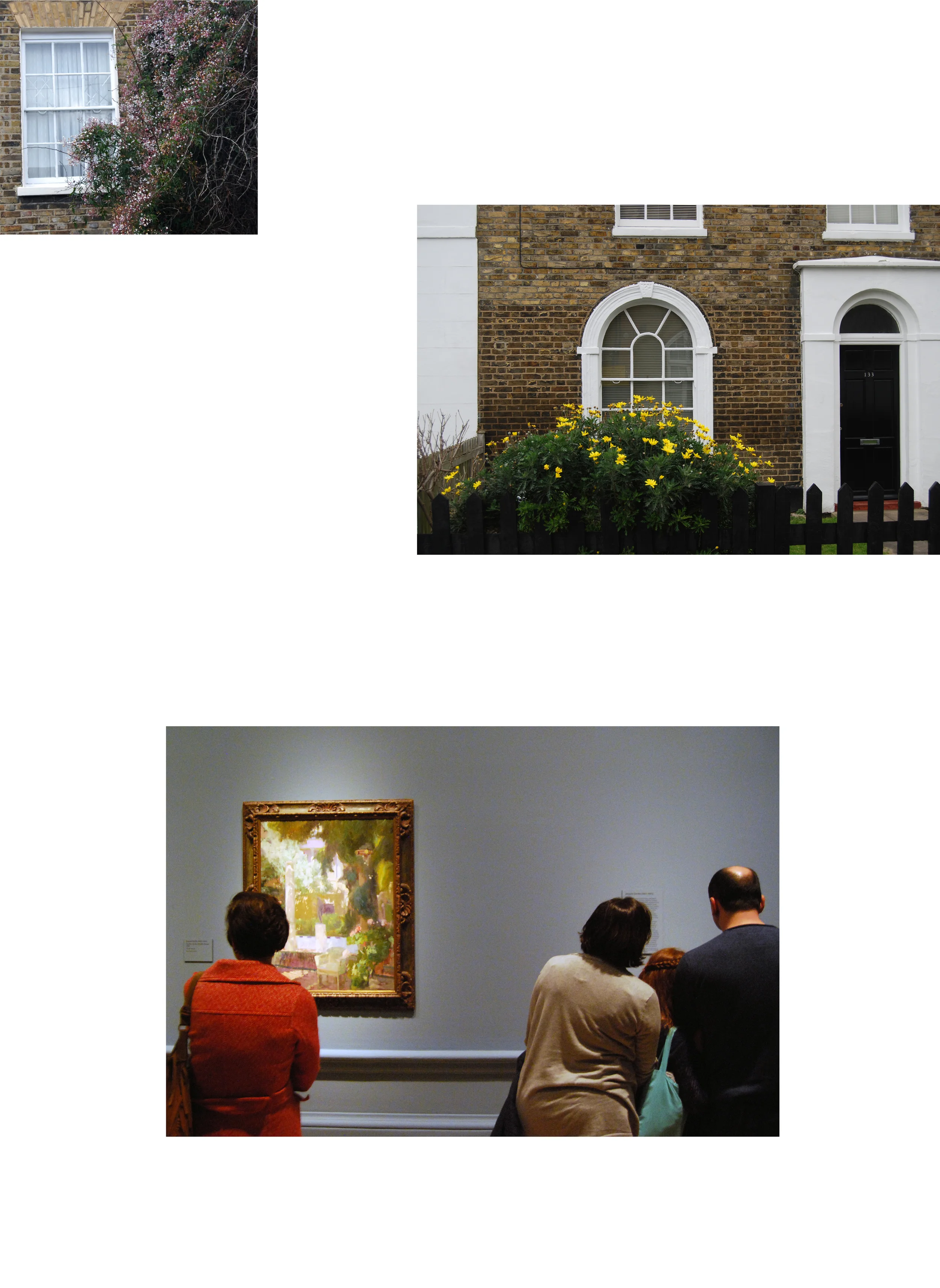
Might it be a failing, the very definition of Scottish Cringe, to base the second entry in The Glasgow Gardener around a visit to London last weekend? My Glasgow gardening activity over the past month has been restricted to digging - lots and lots of digging - and some forking. Although undeniably satisfying, especially in conditions that have been if not taps aff then at least long sleeves aff, the work perhaps doesn’t merit a sod-by-sod breakdown. London by contrast was grey and wintry, which made these globally warmed Peckham examples (top) of monstrous, woody argyranthemum (or marguerite - a plant in Glasgow you’d put out in a pot on the doorstep in June) and prolific summer jasmine all the more unreal.
Part of the reason for my trip south was to see Painting the Modern Garden: Monet to Matisse at the Royal Academy. I had been curious about the exhibition, paintings of gardens being something I’d suspected I don’t like as a rule. I think this prejudice set in early. A faded cottage garden scene vaguely in the manner of Helen Allingham used to hang in the hall of my grandparents’ bungalow in Nairn, northeast Scotland. My grannie, an indomitable gardener to the end, had an enchanted garden, its vitality in stark contrast to this gilt-framed relic; how could static dots of red paint hope to compete with the backlit hollyhocks outside the window?
Anyway, Painting the Modern Garden was a show it would be easy to write off as cosy but there were moments of disarming beauty. I’m aware the opinion “Monet is beautiful” won’t necessarily win me an Art Review gig but it wasn’t something I’d taken for granted; I’m still not wholly convinced a herbaceous border in full bloom, even a Giverny one, can be included in any painting without wrecking it. Monet’s reunited Agapanthus Triptych (spoiler: correct me if I'm wrong but p sure it's mainly waterlilies?), reverently mounted like an altarpiece in its own chapel, was certainly a fitting climax. For me Matisse’s Palm Leaf, Tangier, all zoomed in and amped up, was the highlight, provocatively positioned in a doorway in such a way that the preceding room’s contents were effectively rendered impotent. I loved too his The Rose Marble Table, a spare, sombre composition from the year of the Somme relieved by trailing foliage and the eponymous table’s apparently unphotographable shade of pink.
Inevitably I’ve been thinking a lot about gardens and their representation. Take the pictures in my previous post: especially in February’s absence of plant material, the colours and shapes of the various plastic elements littering the allotment site photograph beautifully. My neighbour’s #0000ff blue net fencing looks punchy and graphic where an image of mere plants might be dull. I recently came across a paragraph from a John Kelsey essay on the artist (and painter) Jennifer Mehigan’s Instagram stating that “Painting is now mostly on and for screens”. Do I want my allotment to be mostly for screens? I don’t think so, but in 2016 it’s a factor in every aesthetic decision. What I really want as far as possible though is to be embraced, engulfed and dwarfed by foliage. Most of the time I thrive on the constant bombardment of visual detritus, from billboards to wheelie bin covers, that's part of living in a major city. For this place I want as little as possible of anything that isn’t a plant.
Wells Blog
Duis mollis, est non commodo luctus, nisi erat porttitor ligula, eget lacinia odio sem nec elit. Maecenas faucibus mollis interdum. Nulla vitae elit libero, a pharetra augue.